
Imperial vs Metric System: What's the Difference?
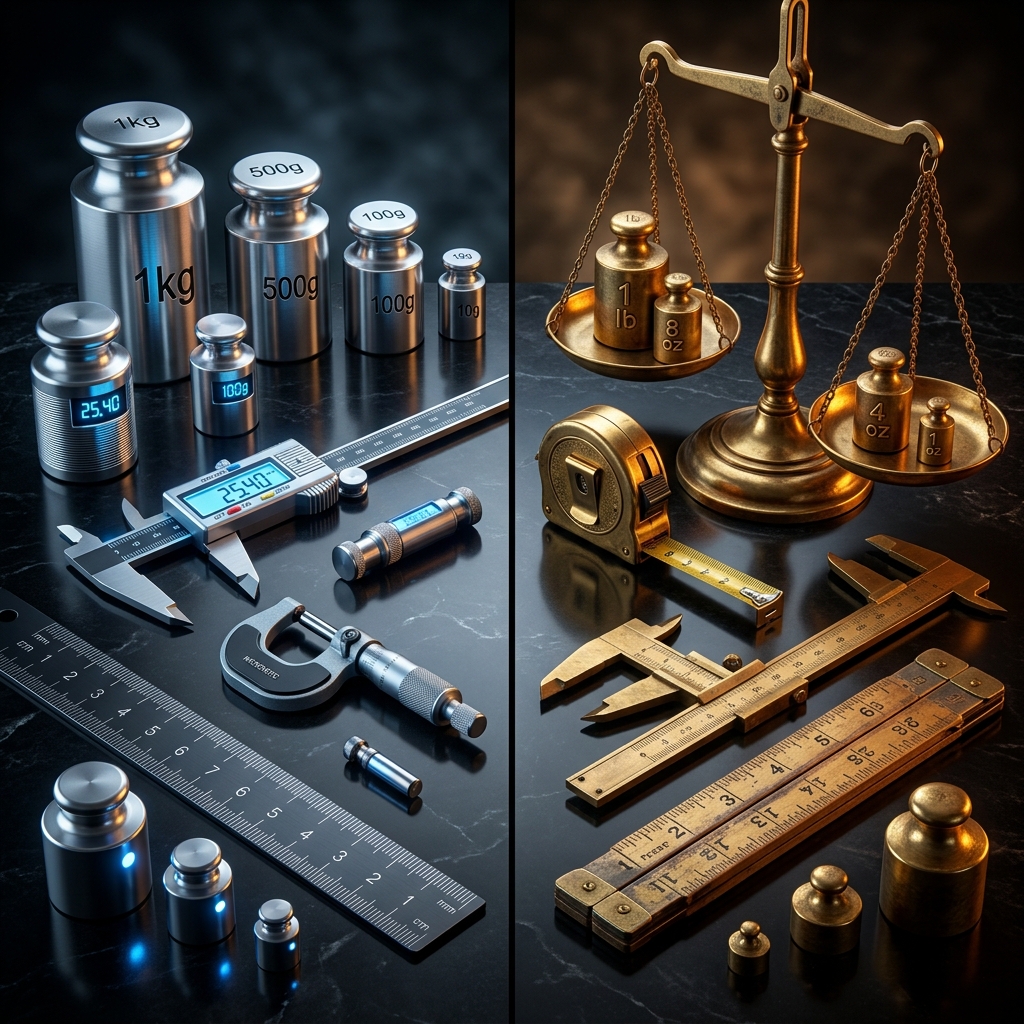
The imperial vs metric system comparison explains how two measurement systems name the same physical quantities. The metric system uses decimal units such as centimeters, meters, grams, kilograms, milliliters, and liters. The imperial system and United States customary units use inches, feet, yards, miles, ounces, pounds, pints, quarts, and gallons.
The difference matters whenever you read height, weight, distance, recipes, fuel economy, weather, engineering blueprints, hardware sizes, or medical records. A height of 5 feet 10 inches equals 177.8 cm. A body weight of 180 lb equals 81.65 kg. A 10-gallon fuel purchase equals 37.85 liters.
This guide covers metric and imperial units, conversion formulas, country usage, advantages, disadvantages, common mistakes, and the best measurement systems resources for height conversion.
Quick Answer: Imperial vs Metric System
The metric system is a decimal measurement system used by most countries, while the imperial system is a non-decimal system used mainly through US customary units and several imperial holdovers.
Metric conversion usually moves the decimal point. Imperial conversion needs fixed ratios: 12 inches per foot, 3 feet per yard, 16 ounces per pound, and 8 pints per gallon.
Metric vs Imperial Chart
This metric vs imperial chart shows the main differences between the two measurement systems.
| Feature | Metric System | Imperial and US Customary |
|---|---|---|
| Main logic | Base 10 decimal units | Mixed ratios such as 12, 3, 16, and 5280 |
| Length units | millimeter, centimeter, meter, kilometer | inch, foot, yard, mile |
| Weight or mass units | gram, kilogram, tonne | ounce, pound, stone, ton |
| Volume units | milliliter, liter | fluid ounce, pint, quart, gallon |
| Temperature | Celsius or kelvin | Fahrenheit in US daily use |
| Best fit | science, medicine, trade, international forms | US daily life, construction, sports, legacy tools |
What Is the Metric System?
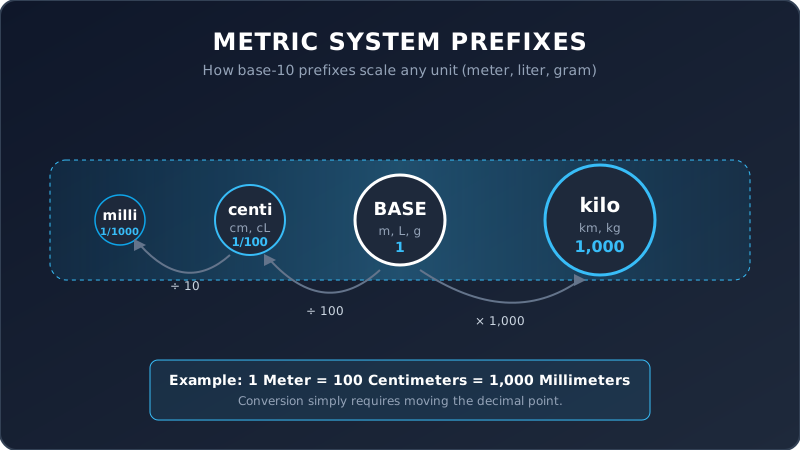
The metric system is the international measurement system based on powers of 10. Its modern form is the International System of Units (SI). SI gives science, trade, medicine, engineering, and education a shared measurement language.
Common Metric Units
| Quantity | Metric Units | Common Uses |
|---|---|---|
| Length | millimeter, centimeter, meter, kilometer | height in cm, roads in km, plans in m |
| Mass | milligram, gram, kilogram, tonne | medicine, food labels, body weight in kg |
| Volume | milliliter, liter | fuel, drinks, recipes, lab work |
| Temperature | Celsius, kelvin | weather, science, medical settings |
Where the Metric System Is Used
The metric system is used in nearly every country for official measurement. It is the default in scientific research, medical records, international sport, pharmaceutical dosages, automotive manufacturing, global shipping, and STEM curriculum.
What Is the Imperial System?
The imperial system is a British system of measurement formalized in the 19th century. US customary units developed from earlier English units and share many names with imperial units. For everyday comparison, people often group both systems under imperial measurement, especially when discussing feet, inches, pounds, miles, gallons, and Fahrenheit.
Common Imperial Units
| Quantity | Imperial or US Units | Common Uses |
|---|---|---|
| Length | inch, foot, yard, mile | height, road distance, screens, building materials |
| Weight | ounce, pound, stone, ton | body weight, food packages, shipping |
| Volume | fluid ounce, cup, pint, quart, gallon | US recipes, fuel, milk, paint |
| Temperature | Fahrenheit | US weather forecasts and home thermostats |
Where the Imperial System Is Used
Imperial and US customary units remain common in the United States, British and Canadian daily speech, and niche industries. You will see inches at hardware stores, feet in construction, pounds on gym scales, gallons at US fuel stations, and Fahrenheit in US weather forecasts.
Key Differences Between the Imperial and Metric Systems
Units of Length
Metric length units scale by 10: 10 mm = 1 cm, 100 cm = 1 m, and 1,000 m = 1 km. Imperial length units use separate ratios: 12 in = 1 ft, 3 ft = 1 yd, and 5,280 ft = 1 mi. For height, inches, centimeters, and feet all describe the same body length.
Units of Weight
Metric weight in daily speech usually means mass in grams and kilograms. Imperial weight uses the avoirdupois system: 16 ounces = 1 pound and 2,000 pounds = 1 US short ton.
Units of Volume
Metric volume uses milliliters and liters. Imperial and US customary volume use teaspoons, tablespoons, fluid ounces, cups, pints, quarts, and gallons. US and UK gallons differ, so label the system when converting recipes or fuel.
Ease of Conversion
Metric conversion is easier for most math because each prefix gives the scale. Imperial conversion can feel intuitive in daily speech, but compound units add steps during data entry, medicine, manufacturing, and trade.
Imperial vs Metric Conversion Examples
Use these formulas for metric vs imperial conversion. Keep the full decimal through the calculation and round the final answer.
| Conversion | Formula | Example |
|---|---|---|
| Inches to centimeters | in x 2.54 = cm | 70 in x 2.54 = 177.8 cm |
| Centimeters to inches | cm / 2.54 = in | 180 cm / 2.54 = 70.87 in |
| Feet to meters | ft x 0.3048 = m | 6 ft x 0.3048 = 1.8288 m |
| Meters to feet | m x 3.28084 = ft | 1.8 m x 3.28084 = 5.91 ft |
| Pounds to kilograms | lb x 0.45359237 = kg | 180 lb x 0.45359237 = 81.65 kg |
| Kilograms to pounds | kg x 2.20462 = lb | 75 kg x 2.20462 = 165.35 lb |
| Gallons to liters | US gal x 3.78541 = L | 10 gal x 3.78541 = 37.85 L |
| Liters to US gallons | L / 3.78541 = US gal | 50 L / 3.78541 = 13.21 gal |
For height, start with total inches. Example: 5 ft 10 in = (5 x 12) + 10 = 70 in, and 70 x 2.54 = 177.8 cm. Use the feet to inches calculator or inches to cm calculator to check the result.
Which Countries Use the Metric and Imperial Systems?
Country usage is mixed in practice. NIST notes that all countries have recognized and adopted SI, including the United States, but some countries keep customary units in daily life or specific industries.
| Place | Common Pattern | What You See |
|---|---|---|
| Most of the world | Metric system | Official trade, science, medicine, road signs, schools, and labels. |
| United States | US customary plus metric | Feet, inches, miles, pounds, gallons, and Fahrenheit dominate daily life. SI is common in science, medicine, manufacturing, and product labels. |
| United Kingdom | Metric with imperial holdovers | Metric governs most trade. Miles, draught beer pints, and personal height in feet and inches remain common. |
| Canada | Metric with mixed daily use | Road signs and weather use metric. Height, body weight, ovens, and construction often mix systems. |
| Liberia and Myanmar | Partial metrication | Metric appears in official or transition contexts while older customary or local units remain in daily commerce. |
Why the Metric System Is More Widely Used

The metric system became the global standard for 5 practical reasons: decimal conversion, scientific consistency, international trade, education, and regulatory clarity. The International Bureau of Weights and Measures (BIPM) maintains the SI framework, including the seven SI base units.
The cost of mixed units can be high. NASA's Mars Climate Orbiter report identified a failure to use metric units in ground software as the root cause of the 1999 spacecraft loss.
Advantages and Disadvantages of Each System
Advantages of the Metric System
- Decimal prefixes make conversion fast.
- SI units work across science, medicine, engineering, and trade.
- Global use reduces mistakes in international documents and data systems.
Advantages of the Imperial System
- Feet and inches feel familiar for height and room size in the United States.
- Fractions such as 1/2, 1/4, and 1/8 fit many woodworking and construction tasks.
- Legacy tools, recipes, road signs, and sports records still use imperial-style units.
Practical Use Cases for Metric and Imperial Measurements
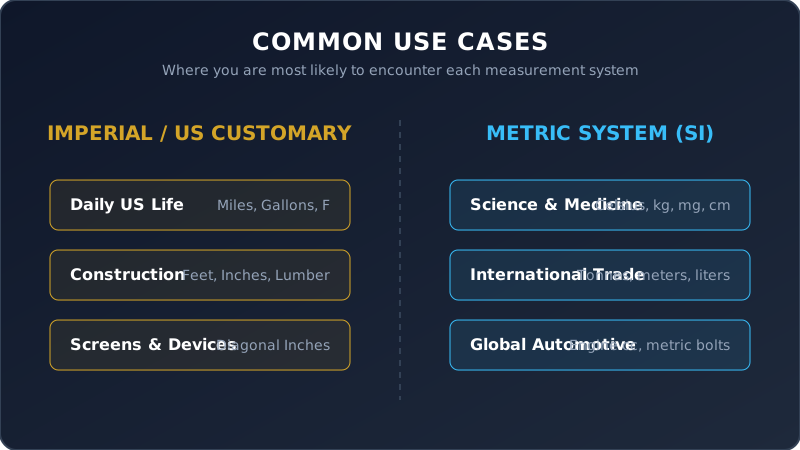
Height and health records
Use feet and inches for US forms. Use centimeters or meters for international records, growth charts, Body Mass Index (BMI), and research.
Engineering and manufacturing
Use the unit specified by the drawing, contract, or standard. Mixed units caused the Mars Climate Orbiter failure, so label every handoff.
Cooking and recipes
US recipes often use cups, ounces, and Fahrenheit. Metric recipes use grams, milliliters, liters, and Celsius for repeatable baking.
Tools and hardware
Automotive shops, hardware stores, and construction sites need both systems because fasteners, lumber, pipes, and imported parts follow different standards.
Use Our Measurement Conversion Tools
Use these tools for metric conversion, imperial conversion, height notation, and quick checks.
Related Measurement System Guides
Use these supporting guides to move through the measurement-systems silo.
Frequently Asked Questions
What is the difference between metric and imperial?
The metric system uses decimal units such as millimeters, centimeters, meters, grams, kilograms, milliliters, and liters. The imperial system uses ratios such as 12 inches per foot, 3 feet per yard, and 16 ounces per pound.
What is the metric system?
The metric system is the decimal measurement system behind the International System of Units (SI). It uses base units such as meter, kilogram, and second, plus prefixes such as milli, centi, kilo, and micro.
What is the imperial system?
The imperial system is a British measurement system built from inches, feet, yards, miles, ounces, pounds, pints, quarts, and gallons. US customary units share many names with imperial units.
Why is the metric system easier to use?
The metric system is easier for most conversions because it uses powers of 10. You convert centimeters to meters by dividing by 100, meters to kilometers by dividing by 1,000, and kilograms to grams by multiplying by 1,000.
Which countries use the metric system?
Nearly every country uses the metric system for official measurement. The United States recognizes and uses SI, while US customary units remain common in daily life.
Which countries use the imperial system?
The United States is the main country where imperial-style US customary units dominate daily measurement. The United Kingdom, Canada, Liberia, Myanmar, and several Caribbean territories use some customary units.
Is Pakistan metric or imperial?
Pakistan is metric for official measurement. Road distances use kilometers, fuel uses liters, and most trade uses metric units. Feet and inches still appear in casual height conversations.
Does the United States use the metric system?
Yes. The United States uses metric in science, medicine, military work, nutrition labels, manufacturing, and trade. Daily life still uses feet, inches, miles, pounds, gallons, and Fahrenheit.
Which measurement system is more accurate?
Neither system is more accurate by itself. Accuracy depends on the tool, calibration, and rounding. Metric is easier to scale because decimal prefixes reduce conversion steps.
Imperial vs Metric System
The imperial vs metric system difference comes down to structure and usage. Metric units use decimal prefixes and serve as the international measurement standard. Imperial and US customary units use mixed ratios and remain useful where local habits, tools, forms, and industry standards expect them.
Use metric units for international clarity, scientific work, medicine, trade, and most official documents. Use imperial or US customary units when your audience, form, drawing, recipe, or tool standard requires them. For height, convert through inches and centimeters: 1 in = 2.54 cm, 1 ft = 30.48 cm, and 1 m = 100 cm.