
What Is a Foot?
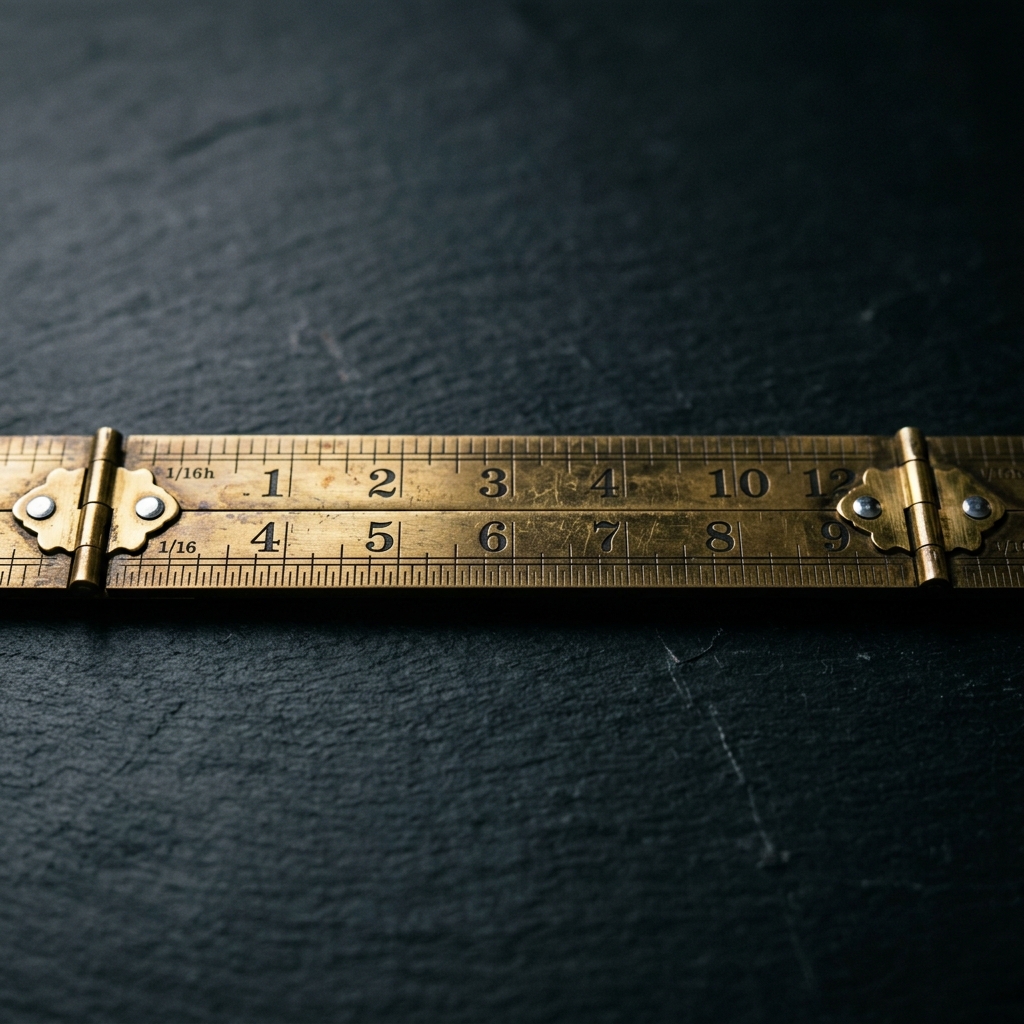
If you came here asking what is a foot, the direct answer is simple: a foot is a unit of length in the imperial measurement foot system and the US customary system. One foot equals exactly 12 inches, 30.48 centimeters, or 0.3048 meters.
Feet show up in human height, room dimensions, sports fields, ceiling heights, aviation, real estate, tools, and construction. In height measurement, feet usually combine with inches, as in 5 feet 10 inches or 5'10".
This foot measurement guide explains the foot definition, how long is a foot, feet vs inches, common conversion formulas, real-world examples, and the best internal tools for converting foot measurements accurately.
What Is a Foot? Quick Definition
A foot is a length unit equal to exactly 12 inches.
The abbreviation is ft. The symbol is the prime mark, written like this: '. A 6-foot measurement can appear as 6 ft or 6'.
Foot Definition and Exact Equivalents
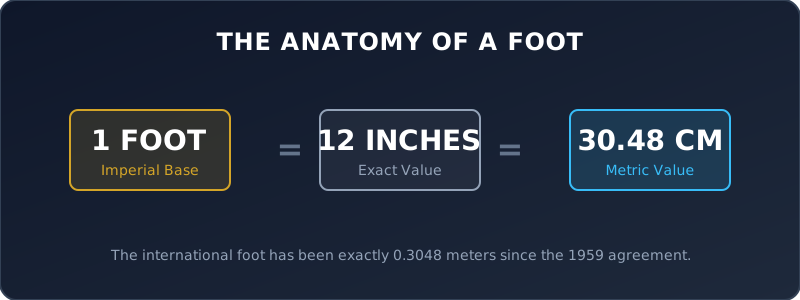
The modern international foot has a fixed value. It does not change by country, tape measure, trade, or industry when the international definition is used. The foot connects to metric units through the inch: 1 foot equals 12 inches, and 1 inch equals exactly 2.54 centimeters.
| Unit | Equivalent | Use |
|---|---|---|
| 1 foot | 12 inches | Exact imperial relationship |
| 1 foot | 30.48 centimeters | Exact metric equivalent |
| 1 foot | 304.8 millimeters | Exact metric equivalent |
| 1 foot | 0.3048 meters | SI meter equivalent |
| 1 foot | 0.333333 yards | One third of a yard |
The most searched foot in inches answer is direct: 1 foot equals 12 inches. That relationship powers feet measurement explained in height charts, room sizes, sports dimensions, and calculator tools.
How Long Is a Foot?
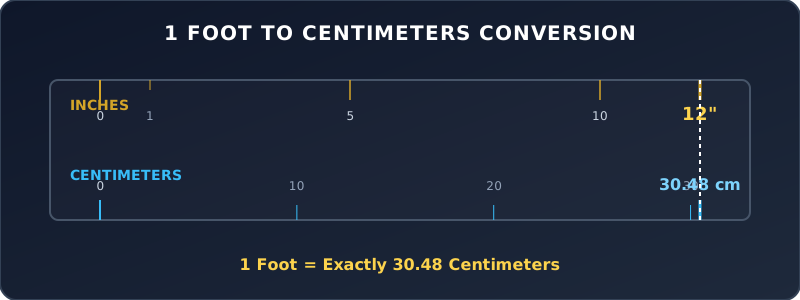
A foot is 12 inches long. A standard school ruler is 1 foot long, which makes it the easiest everyday reference. In metric terms, that same ruler measures 30.48 centimeters.
Body-based comparisons can help with rough mental estimates, but they should not replace a ruler or tape measure. Human feet vary widely. A shoe labeled size 10 does not measure exactly 1 foot, and a bare foot rarely matches the unit.
Quick anchor: 1 foot = one 12-inch ruler = 30.48 cm = 0.3048 m
Feet vs Inches
Feet and inches belong to the same measurement system. The foot is the larger unit. The inch is the smaller unit. Each foot contains 12 inches.
Human height often uses both units together. A height of 5'9" means 5 feet plus 9 inches. To use that value in formulas, convert the feet to inches first.
Formula: total inches = (feet x 12) + inches
Example: 5'9" = (5 x 12) + 9 = 69 inches
Use the feet to inches calculator when you need to turn a height like 5'9" into total inches before converting to centimeters or meters.
Foot Conversion Formulas
Foot measurement conversion uses a short set of fixed formulas. The table below covers the conversions most people need for height, forms, construction, and everyday length measurement.
| Conversion | Formula | Example |
|---|---|---|
| Feet to inches | feet x 12 = inches | 6 ft x 12 = 72 in |
| Feet to centimeters | feet x 30.48 = cm | 6 ft x 30.48 = 182.88 cm |
| Feet to meters | feet x 0.3048 = meters | 6 ft x 0.3048 = 1.8288 m |
| Inches to feet | inches / 12 = feet | 72 in / 12 = 6 ft |
| Centimeters to feet | cm / 30.48 = feet | 180 cm / 30.48 = 5.91 ft |
For the full conversion framework, read the Height Conversion Guide or the Height Conversion Math guide.
Foot Measurement Examples
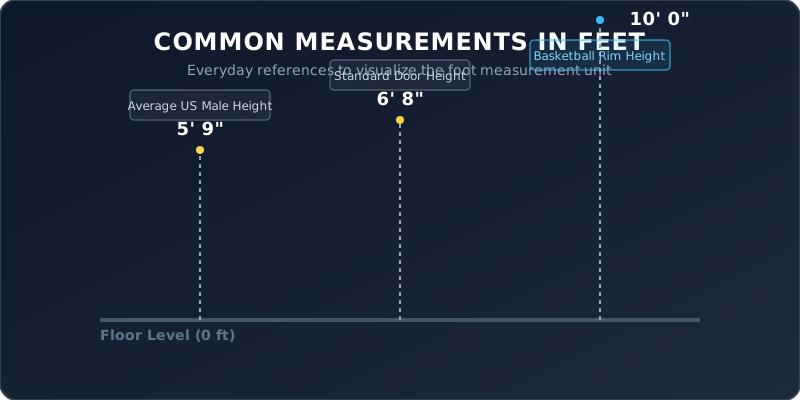
Real examples make a foot easier to picture. These references show common foot measurements in inches and centimeters.
| Example | Feet | Total Inches |
|---|---|---|
| Standard US interior door height | 6 ft 8 in | 80 inches |
| Standard US ceiling height | 8 ft | 96 inches |
| Basketball rim | 10 ft | 120 inches |
| Soccer goal height | 8 ft | 96 inches |
| Queen mattress length | 6 ft 8 in | 80 inches |
| Average adult male height in the US | About 5 ft 9 in | About 69 inches |
| Measurement | Inches | Centimeters | Reference |
|---|---|---|---|
| 4 ft | 48 in | 121.92 cm | Short child height or low partition |
| 5 ft | 60 in | 152.40 cm | Common adult height base |
| 5 ft 6 in | 66 in | 167.64 cm | Average-range adult height |
| 5 ft 10 in | 70 in | 177.80 cm | Common US height example |
| 6 ft | 72 in | 182.88 cm | Common tall-height benchmark |
| 6 ft 6 in | 78 in | 198.12 cm | Very tall adult height |
| 8 ft | 96 in | 243.84 cm | Standard tall ceiling height |
| 10 ft | 120 in | 304.80 cm | Basketball rim height |
Where Feet Are Used
Feet remain common in the United States and in several international industries. You will see foot measurements in these contexts:
Height and body measurement
US height uses feet and inches. A person may say 5 feet 7 inches, 5 ft 7 in, or 5'7". The three forms describe the same height.
Buildings and home dimensions
US floor plans, ceiling heights, room dimensions, door heights, lumber lengths, and real estate listings use feet. A room listed as 12 by 14 means 12 feet by 14 feet.
Sports and aviation
Basketball rim height, football field dimensions, baseball distances, and many aviation altitude references use feet. A cruising altitude of 35,000 feet uses the same unit as a 6-foot height, just at a much larger scale.
How the Foot Became Standard
The foot began as a body-based unit. Many cultures used a human foot as a practical reference for short distances. That made sense before modern rulers, but it caused problems because actual foot lengths vary from person to person and region to region.
Standardization solved that problem. The modern international foot comes from the 1959 International Yard and Pound Agreement. That agreement fixed the yard at exactly 0.9144 meters. Since one yard equals 3 feet, one foot became exactly 0.3048 meters, or 30.48 centimeters.
For the larger history of body-based units and modern standards, read How Height Standards Evolved Over Time.
Common Mistakes With Feet
Confusing decimal feet with feet and inches
A value of 5.5 feet equals 5 feet 6 inches because 0.5 foot equals 6 inches. It does not mean 5 feet 5 inches.
Forgetting the inch part of a height
A height of 5'10" is not 5 feet alone. Convert both parts: 5 feet is 60 inches, then add 10 inches for 70 total inches.
Using the wrong prime mark
A single prime mark means feet, and a double-prime mark means inches. Write 6'2" for 6 feet 2 inches. Reversing the marks creates unclear notation.
Related Foot and Height Resources
Use these supporting resources to move through the measurement-systems silo and related conversion tools.
Supporting guides
Relevant calculators
Frequently Asked Questions
What is a foot?
A foot is a unit of length in the imperial and US customary systems. One foot equals exactly 12 inches, 30.48 centimeters, or 0.3048 meters.
1 foot equals how many inches?
1 foot equals exactly 12 inches. This is the core foot in inches relationship used for height, construction, sports, and everyday measurement.
How long is a foot?
A foot is 12 inches long, which equals 30.48 centimeters. A standard school ruler is 1 foot long.
What is the symbol for foot?
The standard abbreviation is ft. The prime mark is also used, so 6 feet can be written as 6 ft or 6'.
What is the difference between feet and inches?
Feet and inches belong to the same measurement system. A foot is the larger unit, and each foot contains 12 inches.
How do you convert feet to inches?
Multiply the number of feet by 12. For example, 6 feet x 12 = 72 inches.
How do you convert feet to centimeters?
Multiply feet by 30.48. For example, 5 feet x 30.48 = 152.4 centimeters.
Why is a foot called a foot?
The name comes from body-based measurement. Many older cultures used the human foot as a practical reference, though the modern foot has a fixed legal value.
What Is a Foot?
A foot is a fixed unit of length equal to exactly 12 inches, 30.48 centimeters, or 0.3048 meters. It belongs to the imperial and US customary systems and remains common in height, buildings, sports, aviation, and everyday measurement.
Remember three anchor facts: 1 foot equals 12 inches, feet and inches often work together for height, and total inches make conversion easier. Once you know those facts, you can read foot measurements, convert them, and choose the right unit for any form or audience.