
Understanding Height Units: Feet, Inches, Centimeters, and Meters Explained
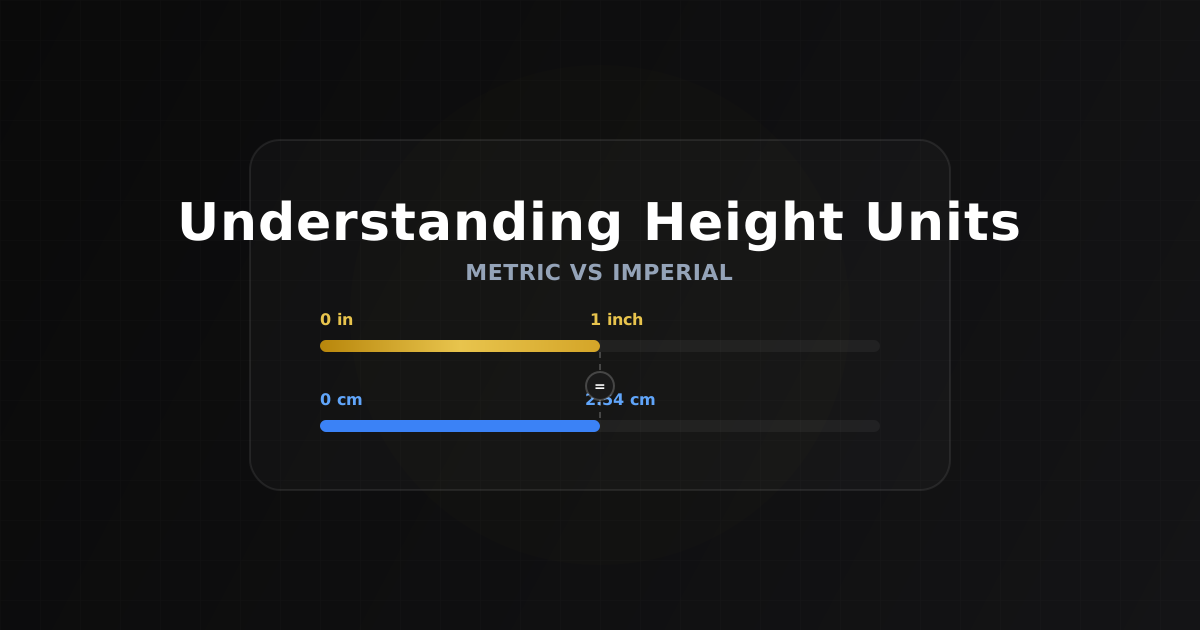
Understanding height units is the process of interpreting and translating length measurements between the metric system and the imperial system. Proper height unit comparison is essential for accurate BMI calculation, reliable pediatric height measurement, and evaluating global human height statistics.
There are 3 main benefits of understanding height measurement: accuracy improves in medical records, precision increases in construction height standards, and clarity expands when using a conversion calculator.
A standard height unit converter relies on 4 main components: the foot, inch, centimeter, and meter. This height conversion guide explores how these units are explained and applied across different measurement systems.
What Are Height Units?
Height units are standardized dimensions of length used to quantify how tall an object or person is.
There are 4 primary standard height units globally, including feet, inches, centimeters, and meters. Different professions utilize specific height measurement tools to gather data. For example:
- Clinicians use a stadiometer for anthropometry.
- Builders use a laser distance measurer for construction height standards.
- Surveyors use surveying equipment on topographic sheets.
Accurate height units provide necessary data in surveying benchmarks, for altimeter calibration, and across continental datums. Learning height units helps ensure accuracy across all these disciplines.
Why Are Different Height Units Used?
Different height units are used globally because of historical trade practices and distinct regional adoptions of measurement systems. The United States utilizes the imperial system, while most other countries adopt the International System of Units (SI).
Understanding height measurement prevents errors in international trade, medical assessments, and aviation altitude units. Use a Google unit converter or a dedicated unit converter app, if you encounter an unfamiliar measurement unit.
Mastering height unit basics prevents catastrophic failures during lunar mapping and in geoid modeling. Standardized units also ensure safety by preventing confusion regarding feet vs meters in aviation.
Common Height Units Around the World
There are 4 common units of length used for height globally, including the foot, inch, centimeter, and meter. Some regions measure larger distances using the yard, kilometer, or mile.
Feet and Inches
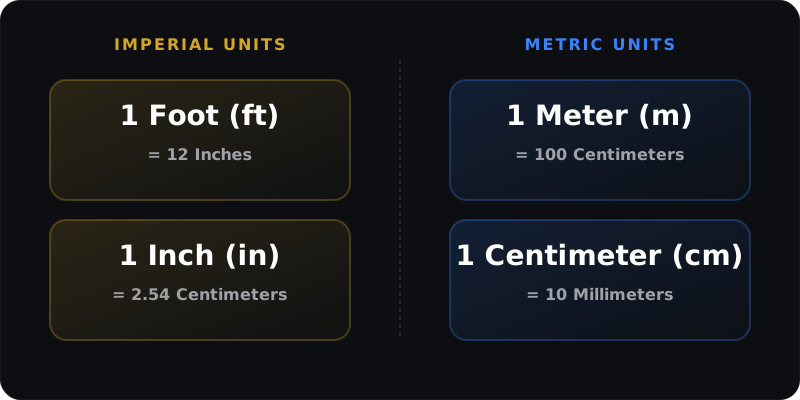
Feet and inches form the primary height in inches system for the United States. One foot equals 12 inches. These units remain the standard for tracking human height statistics in North America.
Centimeters (CM)
Centimeters (CM) represent the primary metric length unit for human height globally. One centimeter equals 0.3937 inches. Medical professionals use the centimeter for pediatric height measurement and the World Health Organization (WHO) growth charts.
Meters (M)
Meters (M) serve as the base unit of length in the International System of Units (SI). One meter equals 100 centimeters or 3.28 feet. Scientists use meters within geodesy software, via satellite altimetry, and across gravimetric surveys.
Imperial vs Metric Height Measurements
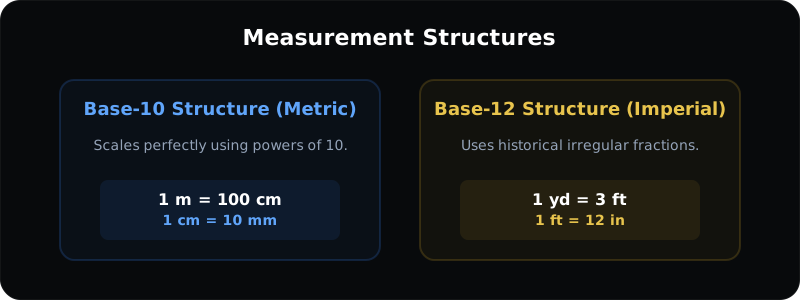
The metric system and the imperial system differ in base structures and global adoption rates. The metric vs imperial debate centers on the difference between decimal increments and historical fractions.
Imperial Height Units
Imperial height units include inches, feet, yards, and miles. The United States Customary System regulates these units. Engineers utilize imperial units in dynamic heights calculations and through leveling rods across North America.
Metric Height Units
Metric height units include millimeters, centimeters, meters, and kilometers. The National Institute of Standards and Technology (NIST) supports metric adoption. Surveyors rely on metric units under barometric shifts, from LiDAR returns, and by orthometric correction.
How Height Is Measured Accurately
To measure height accurately, use a precise height measurement tool like a stadiometer or a laser distance measurer. Stand straight with feet flat on the floor and back against a wall.
Professional medical evaluations require a stadiometer to determine a precise height percentile and to develop an accurate BMI calculation. Accurate measurement techniques improve the reliability of human height statistics.
Geographers utilize advanced tools with radar altimeters and during GPS trilateration. They establish vertical datums at mean sea level over tidal benchmarks to ensure precise GPS altitude measurement.
How to Convert Between Height Units
To convert height units efficiently, use a standard conversion formula or a height calculator. Users frequently rely on Wolfram Alpha or a dedicated height unit converter for fast calculations.
Feet and Inches to CM
To convert feet and inches to CM, multiply the total inches by 2.54. First, multiply the feet by 12 to find the total inches, and then multiply by 2.54.
CM to Feet and Inches
To convert CM to feet and inches, divide the centimeters by 2.54 to get total inches. Divide the total inches by 12 to find the feet, and the remainder represents the inches.
CM to Meters
To convert CM to meters, divide the centimeters value by 100. For example, 150 centimeters equals 1.5 meters.
Meters to Feet
To convert meters to feet, multiply the meters by 3.28084. For example, 2 meters equals 6.56168 feet.
Most Common Height Conversions
There are 4 common height unit examples that users search for daily.
150 CM to Feet and Inches
150 CM equals 4 feet and 11.05 inches.
160 CM to Feet and Inches
160 CM equals 5 feet and 2.99 inches.
170 CM to Feet and Inches
170 CM equals 5 feet and 6.93 inches.
180 CM to Feet and Inches
180 CM equals 5 feet and 10.87 inches.
Which Height Unit Should You Use?
You should use the metric system in scientific, medical, and international contexts, and the imperial system in everyday United States contexts.
Use meters for trigonometric leveling and centimeters for BMI calculation. Use feet and inches for driver's licenses and clothing sizes in the United States. Ensure you use consistent height measurement systems to increase data accuracy and prevent conversion errors.
Frequently Asked Questions
What are the most common units used to measure height?
The most common units used to measure height are centimeters, meters, feet, and inches. The metric system utilizes centimeters and meters, while the imperial system uses feet and inches.
Why do some countries use feet and inches while others use centimeters?
Some countries use feet and inches while others use centimeters because of historical colonization and local industrial standards. The United States retained the imperial system, and most other nations adopted the metric system for decimal simplicity.
How do you convert height from centimeters to feet and inches?
To convert height from centimeters to feet and inches, divide the centimeters by 2.54 to find total inches, then divide by 12 to separate feet and remaining inches. You can also use a height conversion guide or calculator.
What is the difference between metric and imperial height measurements?
The difference between metric and imperial height measurements is their base calculation method. Metric height units use a base-10 structure, and imperial height measurements use a base-12 structure.
Which height unit is used most commonly around the world?
The centimeter is the height unit used most commonly around the world. The centimeter provides precision for everyday human height statistics globally.